

The following article consists of an introduction to the market. First, it briefly describes the history of the automotive industry, calculates the market growth, and focuses on the key market segments and the leaders of the automotive industry. Further, it also explains the reasons for the chip scarcity in the current scenario and their impact on the production of the vehicles. Further, the industry trends are discussed, including the growth of EVs and autonomous vehicles, the size of IoT based vehicle market, and its benefits. Finally, it also discusses the future of hydrogen fueling and the blessings of shared mobility.
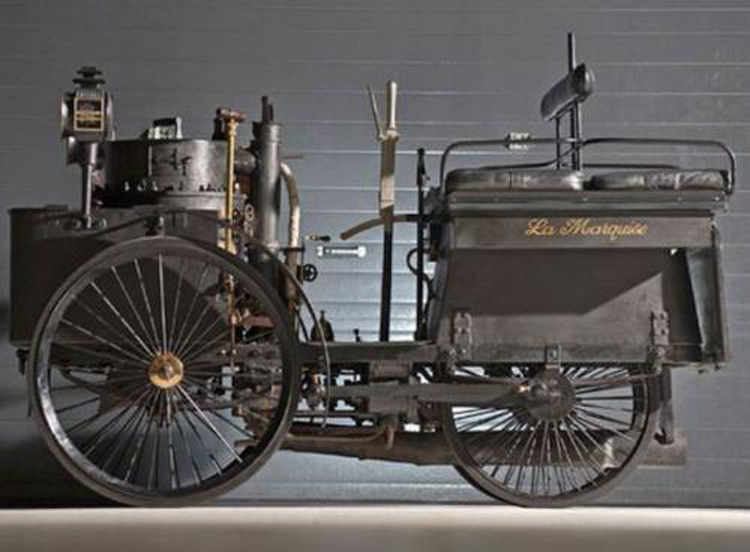
INTRODUCTION
After several years of decline, the global auto production market is growing at a CAGR of 3.1%.
It is estimated to be worth $2.9 trillion in 2022. However, Covid-19 severely hit the automotive industry,
and the growth rate reached -13.7% in 2019-2020. Moreover, the economics of the automobile sector is also changing; the world is adopting new trends.
The use of the internet of things (IoT) is growing; electric vehicles are getting more attention, and autonomous vehicles are in demand.
Azom mentions that by the end of this decade, 15% of all new cars will be fully autonomous.
AUTOMOTIVE INDUSTRY HISTORY
In 1885, Karl Benz invented the first gasoline-powered three-wheeled car with a patent in Germany,
known as the ‘Motorwagen.’ After the development of iconic car models like Ford’s Model T in 1908,
car designs started to veer away from the carriage look and adopt a more car-like appearance.
Further, several developments in the auto industry occurred throughout the 1950s and 1960s due to more technological advancements.
New ideas included fuels with better compression ratios, vehicle comfort and appearance, growing safety and environmental requirements,
vehicle speed restrictions, and heating and ventilation technology.
After the 1980s, the market share of energy-saving autos kept rising. The Japanese automakers’ higher-quality,
more fair priced, and more fuel-efficient cars started to take market share away from the U.S. automotive sector,
due to which globalization of the auto sector started.
AUTOMOTIVE INDUSTRY ANALYSIS
The graph below shows the trend in global sales growth from 2015 to 2021. According to Deloitte, Covid-19 had a substantial impact on the automotive industry.
The disruption of Chinese part exports brought large-scale manufacturing halts in the European market.
The US market also suffered assembly plant closure due to a depressed global supply chain.
The annual sales growth was negative during the Coid-19 but regained momentum in 2020.
In the last 22 years, the manufacturing of automobiles has steadily increased globally.
However, only two events influenced the production of vehicles, one was the 2008 financial crisis,
and the other one was the most recent, Covid-19. Keeping these two events constant, the growth rate of manufacturing up till 2021 was 2.37%.
With the world’s increasing population, the demand for passenger cars is also significantly increasing. As a result,
passenger car manufacturing has increased by approximately 6% in the last three years.
On the other hand, light commercial vehicle manufacturing increased to 2.49%, but the manufacturing of heavy commercial vehicles showed a decline in 2021.
Whereas, with the most considerable growth of 14.89%, heavy buses and coach demand has significantly risen.
China has the largest market share worldwide. Japan is on second, and so on. As per Statista,
In 2021, more than 32% of all vehicles produced per annum worldwide were made in China,
which is greater than the European Union, the United States, and Japan put together.
Volkswagen AG and Toyota are currently leading passenger car manufacturers. In the Year 2021,
Toyota was the leading company, but due to supply chain issues and low sales in its home country,
Toyota was ranked 2nd in 2022.
Toyota, the most revenue-generating company in 2021 in the automobile sector,
also has a best-selling passenger car. A few of the models which are the most selling throughout the world are Corolla, RAV4, Camry, and Hilux.

Please download our Company Profile.
 Location
Head Office :
Ruko Mega Legenda 2
Blok D2 No. 23 - 23A
Batam Centre,
Batam
Kepulauan Riau - Indonesia
Branch Tangerang :
Lantai 3 Mall WTC Matahari No. 5857
Pondok Jagung, Serpong Utara
Kota Tangerang Selatan
Phone : +62 21 5315 5434
 Support
+62 778 4162241
+62 778 4809786
info@perkasalogistikbatam.com
Representative Surabaya :
Karah Indah 1 Blok D - 8
Kel. Karah Kec. Jambangan
Mobile : +62 812 7051 6664
Email : justitia_achie@yahoo.com